Roller Chain Tension Problems: Why Your Chain Is Too Tight, Too Loose, or Uneven (A Practical Guide)
- Share
- Issue Time
- Jul 10,2026
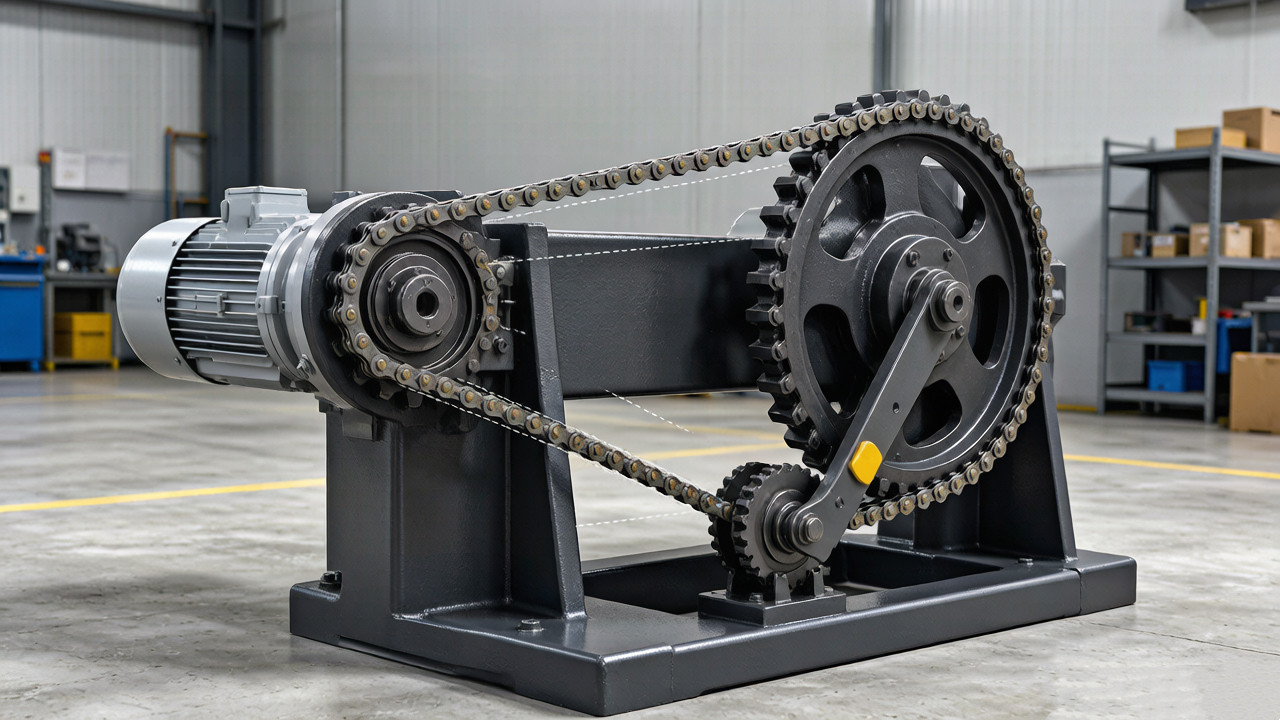
If you've ever searched "roller chain too tight or too loose", you're not alone.
Every week, maintenance technicians, factory engineers, and DIY mechanics ask the same questions on online communities. Whether it's a conveyor system, motorcycle, agricultural machine, or industrial transmission, incorrect roller chain tension is one of the most common reasons for premature chain failure.
Real-world discussions from user communities show that the same problems appear repeatedly:
● "How do I know if my chain is too loose or too tight?"
● "Why does the chain become tight in one position and loose in another?"
● "Should I install a chain tensioner?"
● "Why does my new chain still make noise?"
This article explains these questions in simple English and provides practical solutions that can also be applied to industrial roller chains and conveyor chains.
Why Roller Chains Need Proper Tension
Many people believe:
"The tighter the chain, the better."
Unfortunately, this is one of the biggest mistakes.
A roller chain is designed to operate with a small amount of slack. During operation:
● the chain warms up
● sprockets rotate under load
● shafts may move slightly
● bearings experience vibration
A small amount of free movement allows the drive system to work smoothly.
Too much tension or too much slack will both shorten the service life of the chain.
Problem 1: Chain Is Too Tight
This is probably the most common mistake.
Common symptoms
● Chain feels difficult to rotate
● Motor load increases
● Bearings become hot
● Sprockets wear quickly
● Chain produces a whining noise
Many users discover this after adjusting their chain.
One user explained that after tightening the chain, the wheel no longer rotated freely, and tightening the axle made the problem even worse.They pointed out that the chain was likely over-tightened or had developed tight spots.
Why this happens
When the chain is too tight, every rotating component experiences extra load.
Instead of transmitting power efficiently, the chain begins pulling continuously on:
● shaft bearings
● sprocket teeth
● chain pins
● rollers
This greatly accelerates wear.
Problem 2: Chain Is Too Loose
A loose chain creates different problems.
Typical signs include:
● chain vibration
● jumping teeth
● noisy operation
● poor power transmission
● chain derailment
Some users asked whether a loose chain caused clutch problems. Experienced users immediately noticed that the chain had far too much slack.
For industrial conveyors, excessive slack can also cause:
● poor indexing accuracy
● unstable product movement
● uneven loading
● accelerated sprocket wear
Problem 3: Tight in One Spot, Loose in Another
The chain may feel perfect during one rotation, then suddenly become extremely tight.
This usually indicates one of the following:
1. Uneven chain wear
Older chains do not wear evenly.
Some links become longer than others, producing "tight spots."
2. Worn sprockets
Damaged sprocket teeth change the effective pitch diameter.
3. Misaligned shafts
Even a small alignment error causes changing chain tension.
4. Bent shafts or eccentric sprockets
Industrial equipment that has suffered impact damage may not rotate concentrically.
Many experienced mechanics recommend checking chain tension at multiple positions, because measuring only one section can be misleading.
Should You Use a Chain Tensioner?
The answer depends on the application.
Good applications
● Long center distances
● High vibration equipment
● Agricultural machinery
● Light-duty transmission
● Some conveyor systems
When a tensioner is NOT the real solution
A tensioner cannot fix:
● worn chains
● damaged sprockets
● shaft misalignment
● incorrect installation
If the chain has severe tight and loose sections, replacing the chain may be more effective than adding a tensioner.
How to Check Roller Chain Tension
A simple inspection routine can prevent expensive downtime.
Step 1
Turn the drive slowly by hand.
Check the chain at several different positions.
Step 2
Locate the tightest section.
Always adjust chain slack based on the tightest point, not the loosest.
This recommendation is widely accepted because worn chains often have uneven elongation.
Step 3
Check sprocket alignment.
Even a high-quality chain will wear rapidly if the sprockets are misaligned.
Step 4
Inspect for wear.
Look for:
✔ stiff links
✔ cracked rollers
✔ worn pins
✔ hooked sprocket teeth
✔ corrosion
Common Mistakes to Avoid
❌ Tightening the chain until there is no movement
❌ Measuring chain tension at only one position
❌ Ignoring worn sprockets
❌ Using a tensioner to hide alignment problems
❌ Continuing to run a chain with obvious tight spots
Maintenance Tips for Longer Chain Life
A properly maintained roller chain can last significantly longer.
Follow these basic practices:
☛ Lubricate regularly with the correct lubricant.
☛ Keep sprockets properly aligned.
☛ Inspect chain elongation during scheduled maintenance.
☛ Replace worn sprockets together with heavily worn chains.
☛ Recheck chain tension after the first few hours of operation on a new installation.
☛ Avoid over-tightening after maintenance.
Final Thoughts
Proper roller chain tension is not about making the chain as tight as possible—it's about finding the right balance. A chain that is too tight increases wear on bearings, sprockets, and pins, while a chain that is too loose can skip, vibrate, or even derail.
Whether you're maintaining an industrial roller chain, a conveyor chain, or a power transmission system, regular inspection, correct alignment, and proper tension adjustment will improve reliability and reduce maintenance costs.
By learning from the real questions maintenance professionals ask every day, you can avoid the most common chain failures before they lead to unplanned downtime.